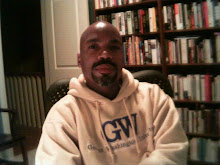
Author Anthony Knight, Jr.

How I Got Over...I think.

Greetings! Welcome to my blog. My name is Anthony and I cannot believe that I am blogging. Over the past couple of years I've heard about blogs and the many other forms of electronic communication--some of which I've used. Generally, I fought and railed against them all. Those who know me well will be, no doubt, surprised by this; my unexpected foray into the world of blogs. Life, though, has an almost mystical way of nudging us into spheres of the unknown--pushing us over the edge of familiarity and forcing us to use our wings of faith. Thus it is with me. In early-July 2007, I was diagnosed with stage-IV lymphoma. The entire ordeal--hospitalization, diagnosis, chemo treatments, remission and life after cancer (LAC)...oh, and let's not forget family drama, is the stuff of Hollywood movie scripts. And there have been some--remember Terms of Endearment? My story, however, seems to be somewhat different, and every time I share it with a long-lost friend or new acquaintance, the response is the same, "Man, you should write about that! Someone might be blessed or encouraged by your story." So, here I am, nudged once again to the edge of unfamiliarity--about to take flight on wings of faith into the spheres of the unknown. This is my story about how I got over...I think.

Tuesday, December 30, 2008

On Being an Emigma: Kidney Failure, Cancer and Lucky Friday the Thirteenth.

Just after 3:00 a.m., a nurse awoke me from a somewhat peaceful sleep. Cheerfully, she told me that a room had been identified and that I would be leaving the emergency area. I was glad--not that there was anything wrong with the emergency room, but there was a lot of activity. During my nap I could feel, subconsciously, the goings and comings of patients; the loud talking of doctors, nurses and attendants clamoring over individuals arriving with serious and not-so-serious medical emergencies; and the ever-present hospital cacophony--a symphonic composition of secret-coded beeps, bells and chimes; the paging of doctors, nurses and other hospital staff; and, when a baby was born--which seemed to be every thirty minutes, the playing of a few bars of Brahms' Lullaby. Thus my nap--while it provided a modicum of rest--was not completely fulfilling. In addition, I was not accustomed to having to sleep with a needle stuck in my wrist and wires connected to my body. It would be good, I thought to myself, to have my own room so that I could begin to come to grips with this--my new reality.


A young man from hospital transportation arrived and helped me move from the emergency room bed to the stretcher. The nurse transferred all my tubes and wires from stationary posts in the room to mobile ones she attached to the wheeled bed. The transport guy then checked to make sure that we had collected all my belongings and that they were resting securely between my legs or under the stretcher. He released the stretcher's emergency brake and we were off. Winding through the halls of the hospital was an adventure; akin to being on an African safari or a deep-sea dive on the Australian Barrier Reef. At every turn I discovered something new and saw sights I had never seen before--patients left on stretchers and in wheelchairs while awaiting care; tattooed, hard-looking, African American male and female hospital employees (mostly transportation personnel or housekeeping staff) cooing like turtle doves at each other, blushing and clearly in the early stages of courtship while on duty (I wondered what I, or anyone else, would have thought of them had they been on Anycorner, USA). Doctors, nurses and other medical staff walked quickly, some slowly, tending to the needs of patients or in various stages of making rounds, taking a break, completing paperwork or consulting with colleagues. I also zeroed in on the facility itself--an immense, maze-like, somewhat dated, yet fairly well-kept facility that seemed to have a lot of secrets. Oddly, I began to wonder what it was like to work at Grady. The vast mix of cultures--racial, ethnic, socio-economic, regional, political, gender, sexual identity, educational--was almost mind boggling. I wanted to know more.


When we arrived on the fifth floor we stopped first at the nurses station. The nurse under whose care I would be accompanied us down the long corridor to the room to help me get situated. Once in the room I was pleased to find out that it would be mine alone; as, by nature, I am a rather solitary creature--contrary to what most of my friends, family and acquaintances may think they know about me. I enjoy solitude--perhaps more than anything on this planet. I mean, other people are great and I enjoy them when I am with them, but there is nothing under the sun as satisfying as a cup of hot tea with lots of lemon (a whole one preferably) and honey at 5:00 a.m. while sitting in my pajamas with a good book, magazine or just piddling--the fine art (and my friend Pattie and I have declared it so) of doing nothing!


Once I was settled the transport guy left. The nurse then reconnected me to the IV and various vital statistic monitoring devices and began her duties--checking my temperature, blood pressure, heart rate, etc. She told me that my stay in this room was only temporary, as the doctors were looking for a room in the coronary care ward so that staff could monitor my heart rate around the clock--apparently, my heart rate was so high they feared I might experience some kind of heart episode. That thought kind of freaked me out, as my dad died of a heart attack in 1990--although his was from complications related to schleroderma--and I couldn't help but think of the irony (after all, I am a junior). The nurse completed her duties and left. Before I was able to get comfortable and get some more rest, the phlebotomist (a hospital staff person responsible for drawing blood) paid a visit to stick my veins. Over the course of my hospital stay I would refer to these staff as vampires--as they came every four hours to fill six to ten vials and small bottles with blood. I noticed their irritating habit most, however, between the the hours of 2:00 and 4:00 a.m. It was odd to me that in a place in which sleep and rest were supposedly valued, patients would be subjected to this kind of violation of such an important bodily function--sleep. I would argue that many hospital patients are sleep deprived--in addition to whatever pathology they might be experiencing. Within minutes, the phlebotomist was gone and I was alone with my television. I vaguely remember seeing images of a black and white movie before falling fast asleep.


When I awoke later that morning I pinched myself to make sure that I had not been dreaming the previous night's events. Nope, I was in the hospital alright, and I was hooked up to lots of machines. Awaking in a hospital was a strange experience. There were sounds and smells with which I was not familiar and my senses were still trying to figure out what was going on. I remember looking around the room and thinking to myself that I was not afraid. In fact, I was more curious about what was really happening in my body than fearful of what the diagnosis would be. For the first time in my life my attention was focused squarely on my body and not on mental activities or on external events. I realized how much I did not know about my body and how, for so long, I had neglected it and its needs.


At about eight o'clock that morning, a team of doctors entered my room. These morning rounds were routine and I would come to eagerly await them and look forward to chatting with the doctors about my body and the illness from which it suffered. I also enjoyed the opportunity to take advantage of free "pre-med" courses. The doctors and residents answered my many questions about not only my body and illness, but also questions I had about medicine in general. They found in me an enthusiastic student--the mental being that I am loved the learning involved with this new experience. It was fascinating! As the doctors asked me routine questions and began talking about what they had planned for me that day, one doctor lifted the sheet covering my body and asked me to raise my hospital gown--he wanted to check the catheter. I complied and to my amazement not a drop of urine was in the bag. My kidneys had effectively shut down.


The first thought that crossed my mind was, "Thank God I am in the hospital!" I couldn't imagine what I would have done had I been in my apartment. Would I have even noticed not urinating? I mean, it's a bodily function that we so take for granted, I wondered if in the course of daily existence I would have noticed not taking a whiz--at least in time before passing out, or possibly dying, from blood poisoning. My next thought, and I remember this as if it happened this morning, was that I had just experienced a miracle. My angel, my friend Pattie. If Pattie had not encouraged me to go to the doctor in the first place, I would not have gone. I would not have been told to "run" to the hospital, and I certainly would not have been there. Possibly, very possibly, I would have been lying on the floor in my apartment near death or dead. The awesomeness of the Universe (God, if you will) and the lessons I had learned from my Seth readings and Jung's theory of synchronicity we, at once, more than just intellectual dalliances. At that precise moment, they became part of my physical and spiritual fiber. I had experienced the wisdom and all-knowingness of Creation in a way in which I never had before. This was more than just meeting the right person who eventually helps you get the job you want, or leaving the house at the right time to get the parking space you want in front of the grocery store, or thinking about a friend and having the phone ring within minutes. True, those experiences are important and give us insight into how the Invisible operates. However, having those forces at work, and witnessing them conspire to save your life is, at once, one of the most amazing and humbling experiences in the world. Something unexplainable happened to me in that moment. I knew that I would be alright--dead or alive--and I knew that I was to learn important lessons. Again, my focus shifted and I was now equally concerned about the lesson(s) I was to learn as I was about my body being healed.


The doctors made note that my kidneys had stopped functioning, and began laying out the day's plan. They immediately set up an appointment for me to have an ultrasound scan so that they could get an idea of what was going on with my kidneys. At this point, the doctors informed me that I was an enigma. They really did not know what was going on and hoped the ultrasound would give a clue. The exam was scheduled for 10:00 a.m. that morning and I was back in my room in time for lunch--although, I'm not sure that was a good thing. Most people have heard about how horrible hospital food is--well, it's true! And, given that my kidneys were in crisis, my diet (and the flavor the food might have had) was more restricted than most. I was on a renal, or kidney sensitive, diet--code for cardboard and water! It was awful.

Late that afternoon, somewhere I imagine around 4:00 or 5:00 p.m., the doctors came to my room to deliver the news about the findings of the ultrasound. My kidneys, it appeared, were slightly enlarged. Relatively speaking, this was good news, as damaged kidneys tend to shrivel and become smaller. Who knew?! Thus, it seemed fairly safe to say that my kidneys were not damaged (as initially thought) but were most likely infected. I was still an enigma, though, as the source of infection was not yet understood. The ultrasound did, however, indicate the presence of "dark masses" around my kidneys, liver, stomach and spleen--in effect, my entire abdominal area. And, although no one was saying it, we were all thinking--cancer. The first concern, of course, was to figure out what to do about my kidneys; however, the thought that I might have some kind of cancer lingered in my mind and seemed almost surreal.

Simply, the doctors informed me that we would begin dialysis the next day. They also scheduled a CAT scan to better determine what those "dark masses" were in my abdomen. When the doctors left, I took a deep breath and thought about what all this meant. Of course, I was glad that my kidneys weren't damaged, as even though I had never seen them, I did feel a certain bond with them and I didn't want to lose them. Moreover, I couldn't imagine being placed on a waiting list for a kidney transplant! Thus, dialysis was the lesser of two evils (although that thought didn't exactly make me jump up and down, either). After allowing these thoughts to settle, I picked up the phone and called my mom and then my sister--my mom, to give her complete and updated information about my condition. My sister, not only to give her the information but also, as a health care professional, to have her use that information in ways that my mom couldn't. My sister was also able to translate this information for my mom in a way that enabled her to digest it more efficiently. I was very concerned about how my mom, in particular, was receiving information, as my younger brother Marc died suddenly in an accident when we were children. I was fourteen and he was twelve. An afternoon of playing and riding our go-cart turned tragic. And, although my mom was putting up a good front, I knew in my heart and soul that all she was thinking about was whether or not she was going to lose another son. I was aware of this fact throughout my entire illness! And, perhaps, this knowledge (in addition to the prayers, medical expertise, medicine and my own mental attitude) contributed to my determination to get well. I could not bear the thought of my mom having to bury another child. I was not afraid of death. I just knew I couldn't die!

The next day, Thursday, July 12, hospital transport came to collect me just after lunch--about 1:00 p.m. We were headed down to my first dialysis treatment. When we arrived, I waited in the hallway outside the dialysis treatment area, along with other patients also on stretchers or in wheelchairs, for almost an hour before being wheeled in (I would learn that one of Grady Hospital's weaknesses is its unspoken modus operandi--hurry up and wait!). Finally, a doctor came out to my stretcher and wheeled me into a room. I first had to have a temporary catheter placed in my groin to which the dialysis machine could be connected. It was a very uncomfortable, yet relatively painless, procedure. Moreover, this catheter would prevent me from doing much sitting up or walking, as if I bent my hips I could bend the catheter, thus rendering it useless. It was horrible! Nevertheless, I got through it and the doctor wheeled me, once again, into the hallway to....yup, hurry up and wait.

Fortunately, in less than an hour, a dialysis technician came to roll me into the dialysis treatment room. It was a fairly large room, one of two, with enough space to accommodate approximately nine patients--both outpatients and those, like me, who where on lock down in the hospital. The technician changed all the necessary tubes and hooked me up to the machine. It was fascinating to watch my blood leave my body, make its way through this archaic-looking machine, and then reenter my body. In talking to the technician, I learned that the process was not hazard-free. That fact made me somewhat nervous. The technicians watched and listened carefully to the machine for any signs of errant behavior--and so did I.

About half way through my scheduled three-hour treatment, one of the medical residents to whom I had been assigned, Jill, found me in the dialysis treatment area. She informed me that I would be able to have the CAT scan that afternoon--earlier than anticipated. I would leave dialysis, sit on my stretcher in the hallway just outside the treatment area and drink almost a liter of odd-tasting liquid (which she happened to have with her). Then, I'd be wheeled down to have the CAT scan--lots of activity! Sure enough, the technician disconnected me from the dialysis machine, rolled me out into the hallway and Jill gave me the bottle of liquid to drink. She stayed with me to make sure that I consumed it all--and, I think, to keep me company. I could tell that Jill knew something serious was going on inside my body and she did her best to prepare me emotionally for the blow she knew was coming. What she did not know about me, though, was that I was way ahead of her. I was not afraid of death, and my way of looking at human existence was far more enlightened than she could ever imagine. I was not her average patient. And, truthfully speaking, I probably did more to help her help me than even she realized. Everything considered, I appreciated her concern and understood well what she was trying to do.

When I had consumed the beverage, Jill decided to not wait for hospital transportation and wheeled me herself to the CAT scan area. I was impressed! She was not willing to do more hurry up and wait. I liked that--my kinda gal! This beverage, designed to enable the CAT scan technician to get better images, has a horrible side effect--DIARRHEA. By the time I got to the CAT scan area, I was struggling to disconnect myself from all the tubes and wires and get to a commode. I barely made it! Jill helped me get back on the stretcher and then left me in yet another hallway to do what...hurry up and wait. You get the idea. Finally, I had the CAT scan, was wheeled back to my room, had dinner, and settled in for my second full night in the hospital.

When I awoke on Friday morning, I remembered immediately that it was Friday the thirteenth--my good luck day. Since my brother Marc's death in 1976, I began to notice that all Fridays the thirteenth bring some small, or not-so-small, element of good luck. Perhaps it's because he was born on a Friday the thirteenth (December 1963). Regardless, I always feel his presence in a special way on these days and I look forward to them. This Friday the thirteenth was no different. Jill, and the other doctors, came to my room as usual at about 8 a.m. They informed me that since my kidneys were not damaged, but only needed to be able to release built up urine, they were going to insert nephrostomy tubes (one in each kidney) so that urine could flow freely. At first, I couldn't imagine what these tubes looked like and how they were to be inserted in my body--clearly, this implied some form of surgery. After a rather lengthy conversation, and some drawing on the dry erase board in my room, I better understood what the doctors had in mind. I can't remember if I had ever heard of ureters before, but I came to learn about their important function.


Ureters, I learned, are those tubes (generally about 10-12 inches in length in adults) through which urine passes from the kidneys to the bladder (which can hold up to two liters of urine). Ureters are muscular in nature and serve as more than just passive ducts. They actually propel urine from the kidneys down to the bladder. The body is, indeed, alive--beyond our wildest imagination and it knows much more about its myriad responsibilities than we. As I continued to learn about my body, I thought how almost criminal it is that we do not--from a very young age--learn more about our bodies. I almost felt betrayed that I had not learned--perhaps as early as kindergarten--the important functions my body carried out and how to better take care of it. Of course, it would be easy to blame parents, but my parents--perhaps like yours--were not doctors. And they had no clue about these kinds of things either. And while my parents certainly provided us with the best medical and dental care, they could not have possibly understood these kinds of intricacies. Perhaps it would be a great idea to give all parents a Know Your Body Manual when a child is born--something from which they could learn and then pass on to the child. This, together with age-appropriate Know Your Body lessons from kindergarten through twelfth grade, should be mandatory. I think I will write a letter to President Obama and our Surgeon General-to-be Dr. Sanjay Gupta.


Most of that day was spent in anticipation of my upcoming surgery. The doctors weren't sure if it would take place earlier in the day or later. As is turned out, I had the surgery (which was relatively painless and quick) at about 6:00 p.m. that evening. Earlier that afternoon I had undergone another dialysis treatment and, as with the treatment the day before, it, too, was aborted about half way through. Hospital transport collected me from the dialysis treatment area and wheeled me back to my room at about 3:30 p.m. At about 4:30 p.m. I was wheeled from my room down to the holding area. I spoke with the doctor who would be performing the surgery and he explained in great detail what would happen in the operating room and answered my questions. The nurses in the holding area hooked me up to an IV and monitoring devices, gave me the antibiotics I needed and had me sign a document that released the hospital of any wrongdoing incase I died. Signing that document really freaked me out. I had never had to sign my life away before and it was scary!


At about 6:00 p.m. a technician from the surgery department wheeled me into the small, almost makeshift-like, surgery room. Her name was Kristina, like my sister, and I immediately felt more at ease. I couldn't help but think that she and my brother Marc were watching out for me. Kristina prepared me and the room for surgery. The doctors arrived, chatted me up a little and began their work. I was conscious, but barely so. The anesthesia given me was not unlike the one dentists use--you are aware of what's going on but you don't feel anything. And, all I had to do was give the word and the attending nurse would have released more--ahh, drugs! The surgeons completed the procedure at about 7:30 p.m. (I remember looking at the clock in the room) and the technician wheeled me back to the holding area so that the nurses could monitor me, supposedly for only an hour. There I remained, though--lying face down on the stretcher as per the surgeon's instructions--long, clear tubes sticking out both sides of my body, for almost two hours. I was exhasted (not to mention the fact that I hadn't eaten all day). Apparently, hospital transportation personnel were very busy and I languished in the holding area for much longer than I should have. By the time they came for me it was after 10:00 p.m. I remember thinking to myself that my friend Karen, who visited me everyday after work and on weekends without fail, surely would be gone by the time I got back to the room.


At 10:30 p.m., the transport guy rolled me into my room. I was still lying face down and I could barely move. My body was spent! As the transport guy helped me maneuver getting off the stretcher with my various attachments (which now included "external kidneys") I glanced over at the dinner tray left in my room. Good, I thought, as I was actually somewhat hungry. As I made my way to the bed, I turned my head and noticed that Karen was sitting quietly in a chair in a corner of the room. Immediately, a wave of emotion engulfed my body like never before and I began to cry. I was so glad to see her face. It had been a long, tedious and emotionally draining day. Her silent presence and gentle, "Hey, Anthony," redefined, in that instant, the meaning of friendship. I got into my bed, made myself comfortable and began eating some of the roasted chicked and veggies on my plate. I didn't eat it all, and Karen only stayed for a short while--she, too, was tired. When she left, I felt myself drifting off to sleep and thought, "Friday the thirteenth, always a day that brings me some small element of good luck."


Next Week: Please Don't Be Sorry For Me. It's Not About You!

Wednesday, December 24, 2008

It's My Kidneys, Damn It, Not My Brain!

As my friend Karen held court on the phone with, at different times, my mother, my sister and my friend Pattie, I wandered somewhat aimlessly around my apartment making sure that everything was in order. I wasn't sure how long I was going to be in the hospital, so I prepared the apartment as if I were leaving town for four to five days. I closed blinds, made sure dishes were washed and collected all the garbage from my three wastebaskets. It then occurred to me that I would need some clothes--at least a few pair of underwear, some socks and a couple of tee-shirts. As it turned out, I only needed the socks. I guess I didn't realize that I'd be wearing sheik hospital attire--those oh-so-stylish, show-all-your-backside hospital gowns (if only my friends could have seen me then!). Anyway, I grabbed the nearest item I could find--a backpack given me by the organization for which I was consulting--and stuffed into it the garments I decided to take with me. It then crossed my mind that I might need a writing pad and pen (just in case the doctors said something that made sense) oh, and a book--I certainly wouldn't want to find myself waiting endlessly in the emergency room without something to occupy my mind. I mean, after all, my kidneys were about to shut down, nothing really serious...surely, there were going to be people waiting with conditions much worse than mine (gunshot wounds, heart attacks and drug overdoses). I imagined that I'd probably be waiting for a good while--especially at Grady (NOTE: For those not familiar with Atlanta or Grady Memorial Hospital, Grady is our local hospital for the indigent. On the ground, it has a notorious reputation--substandard service, a staggering bureaucracy and mediocre staff and doctors. However, my condescending attitude toward Grady in the face of a serious health crisis is almost comedic, if not questionable. That said, I was also scared. In addition to worrying about my body's impending meltdown, I secretly wondered if I would survive the hospital experience. My fears, however, would be assuaged rather quickly, and I would come to learn about the great Grady Secret--it is an impressive institution with unparalleled facilities and a staff and doctors that deserve more respect, adoration and resources).

When Karen finished talking to my family, I took the phone to assure them that I would be in touch once I had gotten settled in the hospital. I hung up the phone, collected my belongings and Karen and I left the apartment. Before closing and then locking the door, I gave one last glance at my beloved environment and said a silent prayer. I didn't know what was going on inside my body, but I knew that if the unnamed malady didn't claim my life, the hospital environment certainly might. I blew a kiss to my apartment and promised it I'd return. I then set the alarm, closed and locked the door, and descended the stairs to the parking lot.

Karen and I didn't talk much on our way to the hospital; besides, the walk from my apartment to Grady was only fifteen minutes. The car ride was sure to be no more than five. Before going to Grady, I asked Karen to stop by my bank's ATM machine at Georgia State University. I had received a check from my client earlier that day, and had not had an opportunity to deposit it. We made the quick pit stop at the ATM (just around the corner from Grady) and then made our way to the hospital parking lot. When we entered the emergency room, I presented the lab report my doctor had faxed to me to the gentleman sitting behind the glass partition. He took the sheet, looked it over and motioned to me to sign in using one of the forms just across from his post. I filled it out and deposited it in the designated receptacle. Now, for the wait. However, within just minutes, my name was called and I reported to one of the intake rooms. The technician took my temperature, blood pressure and asked me some basic questions. When he finished, he sent me back to the waiting room. Once again, I was called within minutes. This time, I was instructed to go to another area in the emergency room. There, other technicians asked me yet another series of questions and before I could collect my thoughts, I was being thrust upon a stretcher and wheeled to yet another area in the emergency room. Karen followed closely behind and, for the first time, I began to feel somewhat nervous. The hospital transportation personnel wheeled me to a private room. An attendant gave me one of those stylish gowns to put on, told me to get up on the bed and informed us that a nurse would be in soon. She turned quickly on her heels and bolted out the door. Karen and I were alone. The room was stark, cold and very bright. I looked around, and then I looked at Karen. I didn't know what she was thinking, but I couldn't believe I was in the damn hospital!

While I changed from my street clothes to my hospital attire, Karen and I made small talk-- commenting on everything from the furniture to the odd-looking machines in the room. Not wanting to let fear dominate our emotions, we looked for anything to distract our attention and to keep up our spirits. Soon, a nurse entered the room with a handful of stuff. She put these items--vials, bottles, unidentified packs of fluids, etc., on top of the nearby bureau. She then began rummaging through the drawers of this same bureau and took out a collection of needles, gauze pads, alcohol swabs and other ephemera. Within minutes, I was connected to an IV and all of those odd-looking machines--I was officially online! Strangely enough, the first thought to enter my mind was, "WOW! I'm really in the hospital." Being attached to all the paraphernalia made it official and, at first, it was kind of cool--that is, until the nurse inserted a catheter in my penis. For although it did not hurt, it was the weirdest sensation I had ever had in my life. And, it was somewhat uncomfortable. I couldn't help but think that there are men in the world, straight and gay, who actually enjoy this kind of penis stimilation--yikes!

Not long after I was "hooked up," a procession of doctors, residents and medical interns who, I can only imagine had been hovering outside my room like vultures waiting for the damn animal to finally die, began to descend one by one (and sometimes in small groups of two or three). Each medical professional asked what seemed to be the same questions.


"So, Mr. Knight, how are you feeling?"
"Great," I responded.
"Do you have any pain?"
"No, not at the moment," I assured them.
"Do you smoke?"
"No."
"Have you ever smoked?"
"No, never. I hate the smell of smoke."
"What about drugs? Have you ever done drugs?"
"No, never."
"Nothing?"
"Well," I admitted, "I smoked a joint in high school, but I didn't like
it. And, actually, I didn't even feel anything. Besides, it was a form of
smoking and I really hate smoke."
"What about other drugs?"
"Nope!"

I explained to them at length that I had never been interested in experimenting with pills or cocaine or any other form of hard drug. As an adolescent, most likely due to my Nana's constant insistence that my siblings and I stay away from drugs, I was too afraid to try them. Later, as a young adult, I made the conscious decision to not ingest anything that altered my state of my mind.


"What about over-the-counter drugs? Aspirin? Tylenol? Excedrin?"
"Nope, nope and nope," I said. "Occasionally I will take an aspirin,
but a bottle can remain in my medicine cabinet for up to a year."
Then they asked, "What about alcohol?"
"No sir," I responded, "except for the occasional glass of wine with dinner or one of my friend Brenda's Cinco de Mayo margaritas. I don't really like the taste of alcohol."


Well, they went on like this for what seemed like hours. At first, I remained upbeat and eager to answer their questions. The "good student" in me wanted to please the teacher. I wanted to give the doctors all the information they might need so that they could figure out quickly what was going on. I even allowed myself to think, naively I might add, that I would be able to go home the next day; or, at the very least, in two days. How wrong I was!


The doctors continued with this line of questioning, but then added a new twist. Now, they were beginning to ask me questions like: What day is it? How do you spell your name? What year is it? Who is the president (to that question, I almost answered, Donald Duck, but I thought they might wisk me off to the psyche ward)? How did you arrive at the hospital? Do you know where you are? The questions seemed ridiculous, at best. I could not believe that they were actually asking me questions like these. What the hell?!

Finally, another doctor came in and began to go through the drill once more. By this time, I had had it. I had been in that hospital emergency room for well over three hours and I was tired, very nervous, confused and completely frustrated by the line of questioning. So, this poor doctor got the gift of my rage. I opened up and, with great restraint and characteristic diplomacy, tore him a new asshole. I reminded him that my doctor had told me to come to the hospital because my kidneys were, in his words, about to shut down. "Funny," I informed him while pointing to the catheter, "I am still peeing." Next, I criticised him and his colleagues for pursuing a line of questioning that, to me, did not address the malady which landed me in the hospital in the first place, my kidneys. Then, I went up one side of him and down the other for asking questions that suggested that there might be something wrong with my brain. "My mind is strong," I told him. "It's my kindeys, damn it, not my brain!"

Patiently, he listened to me rant. When I finished, and it was clear that I had collected myself, the doctor began to describe why that line of questioning was important. He told me that often, when a patient presents with the kind of imminent kindey failure that he and his colleagues saw in me, it is because the patient has abused some kind of drug and/or alcohol. He went on to explain that other indicators in my lab report (low potassium levels, high white blood cell count, etc.) suggested a body in crisis. Finally, he pointed out that a normal creatinine (the waste product created by our muscles) level should not be more than 1.2. Mine was 15.7! Given this scenario, all the doctors who saw and talked to me that evening believed, and rightly so, that I was on the verge of imploding. Easily, he told me, I could have been hallucinating or, worse, about to pass out. The fact that I was so alert and seemingly "well," literally stunned them. This would not be the first time that my body would mezmerize the doctors and me--as over the course of the next two days, doctors would call me an enigma. Before he left my side, this doctor said to me, "Mr. Knight, we know it's not your brain. However, no part of the body operates in isolation. You may not know it, you may not even feel it, but your body is in crisis and, at least for now, your kidneys seem to be the main target. So, please bear with us while we try to figure out what is going on and what is making your body unhappy. We promise to try to solve this puzzle as soon as we can and get you home. Until then, you will be here and we will work hard to get your body back on track." Something about the way he spoke and gently "put me in my place" reassured me.

By now it was just after midnight. Karen was fading fast, so I suggested that she go home and get some rest. She promised that she would see me the next day after work and gave me a kiss on my cheek. Up until that moment Karen had always been a good friend--the best. Almost instantaneously, though, she became the big sister I never had and my surrogate mother. I felt very lucky. Karen left and I was all alone. I tried to meditate on my situation, but I was too tired. A nurse came in and told me that they were looking for a room for me and that until one was found, I would remain in the emergency area. One of the last things I remember before dozing off was the bright light in the room, it was annoying. On her way out, the nurse asked, almost intuitively, if I wanted her to turn off the light. I said, "Yes, please!" and she left. After a long, stressful and tedious evening, I finally was able to take a nap.


Next Week: On Being an Emigma: Kidney Failure, Cancer and Lucky Friday the Thirteenth.

Tuesday, December 23, 2008

The Constipation From HELL!

Most of us, at some point in our life, have experienced constipation (or its evil twin diarrhea). During those times, we frequently wait it out--hoping that it's nothing serious and that it will resolve itself as quickly as it came. At other times, we are forced to make that familiar trip to the drugstore, to walk down that dreaded aisle maked "Laxatives" and begin reading the labels of seemingly hundreds of brands of stool softeners, bowel cleansers and "stimulators." Interestingly, the word laxative is derived from the Latin laxare meaning "to relax" (not surprisingly, our bowels--as do other body parts--have to be relaxed to function properly). Yet there are times, rare though they may be, that constipation signals something much more serious--something, in fact, potentially fatal--that no laxative or level of "bowel relaxation" will cure. In late-June 2007, unbeknownst to me, I was suffering with this kind of constipation.


It all started relatively uneventful enough, I noticed that my bowels weren't operating on their normal schedule. Generally, I awake every morning and within 30 minutes to one hour, I'm headed to the bathroom to relieve my bowels of their contents. Oddly enough, I look forward to this time every morning. In a strange way, it reassures me that all is well, that my body is functioning properly and that I'm not stressed (as if I am stressed, it might be a few hours or even days before my bowels move). Thus, this simple bodily function serves, for me, as a daily "State of the Mind-Body" report. Not only do I look forward to relieving my bowels, but also I look forward to reading the many magazines stacked in order on the sink next to the commode (Williams-Sonoma, National Geographic, LL Bean, Mother Jones, Museum News, Martha Stewart Living, etc.). It is a relaxing moment, indeed. Often, I linger in the bathroom long after my bowels are relieved. I almost hate to leave. But, the day calls and I wipe and flush.


When I arrived in Florida on June 23, 2007, to visit my grandfather, I was very agitated. A very large consulting project on which I was working was demanding more of my time and causing me to travel more than usual. Making the monthly drive to check in on my aging grandfather was becoming more difficult, primarily because of the travel demand and the inordinate amount of housework and other chores I did while in Florida. Equally challenging was dealing with a grandfather who, increasingly, was becoming more needy as he willingly gave into the gravitational pull of the aging process. I was, in his eyes, his wife, cleaning boy, chauffeur, cook, best friend, trusted confidant, personal shopper, secretary, primary caregiver and grandson. Clearly, too many roles for one person. After twelve years of service, I was completely worn out. I had no more to give. I was empty, and I wanted my Life back!


When I awoke that Sunday morning, June 24, 2007, I began my routine--making breakfast, washing dishes and lightly cleaning badly soiled areas in the kitchen (I would do the heavy cleaning over the next four or five days). Since I was so agitated, I knew that I had to have a serious talk with my grandfather. We were going to have to hire a housekeeper. My nerves were so frazzled that I did not realize that I had not moved my bowels that morning. Instead, I was angry and I needed to express myself. While preparing breakfast, I went over in my mind how I would approach the subject, as my grandfather was not a person who dealt well with change. Finally, I decided to talk to him after we ate. I would gently begin the conversation while he finished his coffee and while I washed the breakfast dishes.


I ate our familiar breakfast slowly--grits with butter and cheese, sauage and bacon (one piece of each) eggs for my grandfather, coffee and orange juice. Nomally, I ate with the appetite of a lion. Back in Atlanta I did not often cook like this for myself. In Florida, with my grandfather, my southern roots exposed themselves and I fell easily into patterns of eating that had nurtured me from childhood. This morning, though, I wasn't very hungry. In fact, I didn't finish my breakfast. I threw out almost half of it. This behavior struck me as odd, as while I prepared breakfast I did not notice a potential lack of appetite. I remember making a mental note of that moment. In contrast, my grandfather "woofed" down his meal (an eating behavior that earned him that nickname when my grandmother was alive). He is a voracious eater and generally finishes a meal with remnants of the meal in his moustache and on the sides of his mouth--not a very pretty sight. When he finished, I collected the dirty dishes and began KP duty.


As he sipped his coffee, I began my pitch. I began by telling him about my new work load, about how much traveling I was doing, and about how the seven- to eight-hour trip from Atlanta to Deltona was beginning to take a toll on me (actually, it had already exacted from me a significant toll). He listened, almost, though, as if not completely understanding. I spoke slowly and clearly, making sure that he was following. Then, I lowered the boom. I told him that I wanted to bring in a housekeeper to clean the house so that I wouldn't have to do as much work and so that we could have more time to ride around and visit friends and family (which he really enjoyed doing). Flat out, he declined the offer. I rebutted by telling him that he would not have to pay for the servce, I would foot the bill. He refused. He didn't want a stranger cleaning his house. At that point, I did not know what to do. I felt more agitated and I was furious. I thought to myself, "How could he be so damn insensitive?" How selfish! Little did he know, though, I had made a mental executive decision. I was not going to continue with this routine. I was spent. And I knew that I could not go on. We would have a housekeeper.

Later that morning, I did move my bowels. It took quite a while, with significant strain, and the effort didn't produce much of a result. I knew something was wrong, but I chaulked it up to the extreme stress under which I was operating. As the week wore on, I noticed that my appetite fluctuated between being very weak and almost nonexistent. And, the constipation continued. In fact, very little waste left my body that entire week. Mostly, I assumed it was due to my not eating very much. In addition to the poor appetite and the constipation, I also had two consectutive nights during which I had extreme pain in my lower back. The first night it was on my left and the second night it was on my right. The pain was accompanied by severe night sweats and discomfort. Again, in my ignorance, I summised that the rotting waste in my intestinal track was wreaking havoc on my immune and other body systems. Fortunately, the week ended. I had completed all the cleaning in the house and I was ready to get back to Atlanta.

The drive back to Atlanta was difficult. I felt weak and my stomach was in pain. I remember stopping at a McDonalds and ordering a fruit salad. And although I was somewhat hungry, I barely got it down. I just wanted to rest. After driving just over seven hours, I arrived at my apartment. I was home. The Fourth of July was just days away, and I was looking forward to not having much to do. In those days just before the holiday, I continued to have a weak appetite. Also, I would ocassionally experience severe abdominal pain--so much so, that I would double over on the floor, writhing like a wounded snake. I had never experienced constipation like that, I thought. My innards were in turmoil.

I spent those days just before the Fourth, as well as the actual holiday, in varying degrees of pain and/or discomfort. On Thursday, the fifth of July, I suddenly wanted to eat. I went to Whole Foods and purchased fresh salmon and string beans. I returned home, prepared my meal and ate. It was delicious. I felt as if I were on the road back to recovery. Whatever I had gone through, was almost over--so I thought.

The next morning, at about 6:00 a.m., my friend Pattie called. It is our custom to catch up and chat during the early-morning hours, once or twice a week, as she drives into Washington, DC from her home in Gainesville, Va. I relish those talks and her friendship. Both sustain me in times of great joy and despair. This morning was no different. I began to share with her what I had been through while visiting my grandfather in Florida and upon my return to Atlanta. She listened carefully and then, in her usual gentle manner and in her characteristically soothing voice, she suggested that I see a doctor. She didn't sound an alarm and she didn't make me worry about the worst. She simply thought that since the symptoms had gone on for a couple of weeks, it wouldn't be a bad idea to let a doctor check me out just to make sure everything was okay. I ageed. And, since I hadn't gone for a check up in many years, I was somewhat willing to go--if only out of curiosity.

Later that morning, I asked my friend Kate for a referral. The doctor she recommended, Dr. Nolan, happened to have a practice within walking distance of my apartment. What luck! When I called and described my symptoms, he scheduled me for 10:00 a.m. Monday morning (July 9, 2007). Actually, he fit me in between scheduled patients. Once in his office, I again described to him the sypmtons I had experienced--constipation, loss of appetite, abdominal pain, fatigue, some weight loss, ocassional night sweats, and two episodes of lower back pain. He withdrew a few vials of blood for lab work and gave me a packet with which I was to collect feces--homework. Once the visit was over, I began to walk home. It was a beautiful summer day, and I was feeling good--certain that the results of the lab work would reveal a simple problem with an equally simple solution. Ironically, the constipation had begun to resolve itself the weekend prior to my appointment (so much so that I had considered cancelling the appointment with Dr. Nolan--fortunately, I did not). Before going home, I went to a local vegetarian restaurant and had lunch. I was feeling somewhat fatigued, so I walked the rest of the distance home and chilled out.

The next day I busied myself with activities around the house while waiting for the doctor's call. When I did not receive it by noon, I decided to take a drive out to Fairburn, Ga. where I was building a beautiful new Martha Stewart home. The house was fairly complete and I enjoyed walking around inside imagining the fun decorating project it would be. I was scheduled to close on July 26, 2007, just over two weeks away. I was very excited. I didn't hang around the house long, as I wanted to get back to my apartment to see if the doctor had called--he had not. It was just after 2:00 p.m., so I relaxed a bit before getting ready for my afternoon shower and Oprah. At about 3:45 p.m., just after I started to run the water for my shower, the phone rang. It was Dr. Nolan. He told me that he had received the lab results and that I should run (his word) to Grady Memorial Hospital. My kidneys, he informed me, were about to shut down!

Mentally, I had no context for this information. For although I had family members and friends who had been hospitalized, I never had been. Hospitals, in my mind, were places to which "other people" went, not I. And, after a rather involved exchange, I agreed to go. I was terrified. First, I called my friend Karen. After my telling her briefly what the doctor said, she cut me off and told me that she was leaving work immediately to come pick me up--I'm not quite sure how she understood what I said through the tears and mucus. I was a wreck. Then, I called my mom, my sister, and my friend Pattie. I faxed to them the lab report the doctor had faxed to me and, when Karen arrived, they all exchanged phone numbers. The web of support had begun to weave its loving threads around me and I was about to embark on the most profound journey of love and compassion that, up until that moment, I had ever known.

Next Week: It's My Kidneys, Damn It, Not My Brain!